The most important thing you can teach a child

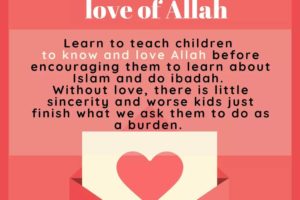
The most important thing you can teach a child is to love herself. I hope I realized this before it is too late for my own children. Self-love, self-compassion and self-care are the essentials of all skills. With discoveries in positive psychology it has now become an established truth – unless we nurture our own selves, we can never become deeply alive. Unless you cherish your own life, you can never reach the depths of your soul from where you can pull out compassion for others. However, self-love is not a lesson to be learnt in a classroom. It’s a skill we all start acquiring subconsciously from the moment we are born. Where and how do we learn self-love? We learn it from the way we are treated by parents, primary carers and other dominant figures in our childhood.
Just like any mother, I love my children most dearly. Since we love our children, it’s only logical to think we can easily teach them to love themselves too. However, it doesn’t seem to work out that way. Why is it we find it so difficult to communicate our love? Why is it so difficult to teach self-love?
I now have the most loving relationship with my father. He is my rock, he is my source of motivation, he is the one who pushes me to always cross the boundaries and go out into the unknown territories to try new things. But things were not the same when I was growing up. He was strict and impatient with his children. I used to write a diary and I remember from the age of 8 there always used to be something about my father in my diary. Something about what he did or what he said and how upset and angry I became. I remember writing “One day when I grow up and if I have children I will never make them do X, Y and Z. I will not say this or that to my child” Guess what happened when that ‘one day’ and ‘if I have children’ arrived? Lo and behold, I was the exact replica of my father.
Sometimes we can’t help a child to love herself unless we go through the painful journeys of soul-searching and self-exploration ourselves. The experience that leads us to admit “Yes, accident-prone, clumsy and stubborn children deeply annoy me. But now that I have these children- can I be a grown-up adult who overlooks their childlike behaviour and see how lovely they are? And let them know it too?” And yet it is still difficult because unless we are deep thinkers, we operate from our subconscious, not from our conscious mind.
As much as I love my children I often have difficulty communicating this. I don’t have time to differentiate between ‘being bad’ and ‘being a small child’. Surely you are bound to encounter many moments of frustration as a mother. However, the words that come out of your mouth in those moments make all the difference in the world. Words are powerful, more so to a young child.
Imagine saying ‘You are too small to know that lying is forbidden in Islam. When someone tells a lie, it may hurt others’ instead of ‘Stop being such a liar. I know the truth already. Why did you lie to me? Terrible child’
Imagine saying ‘It’s difficult to share. Sometimes even adults have difficulty sharing. But you will learn that when you give to others God will replace it with more’ instead of ‘Stop making a fuss. Why are you such a selfish brat?’
Imagine saying ‘Sometimes it’s hard to always remember praying on time. You are young and I’m here to remind you, even if you get bored with my reminders.’ Instead of ‘Why do I always have to remind you to pray on time? You are old enough to pray without being told. If you can’t even pray your salah on time, what is the point of fasting?’
No child is innately bad. All children are born upon the fitrah- the natural inclination towards the truth and all things good. The child who is made to feel bad may develop self-hatred which may interfere with her learning, living and loving more. On the other hand, the child who is made to feel good about herself will develop self-love. A child who feels loved will learn, live and love more at a deeper level.
Iroda Ahmed
#islamicparenting#homeschooling#raisingyoungscholars#parentinggoals#characterbuilding#nurturingthecharacter#lifeskillsforkids